If you are getting ready to sell an adobe home in Taos, you already know it is not a standard listing. Buyers here are often drawn to more than square footage or finishes. They are responding to architecture, texture, history, and the feeling of living in a place with a strong identity. That is why selling well takes more than putting a home on the market. It takes smart preparation, thoughtful presentation, and a clear story. Let’s dive in.
Why Taos adobe homes sell differently
Taos is a unique real estate market with a small number of sales and a wide range of property types. According to Redfin’s Taos housing market data, the median sale price was $599,000 in March 2026, with a median of 205 days on market and only 7 homes sold that month. Zillow also reported 124 active for-sale listings in Taos as of March 31, 2026, showing how important it is to stand out in a limited but competitive market.
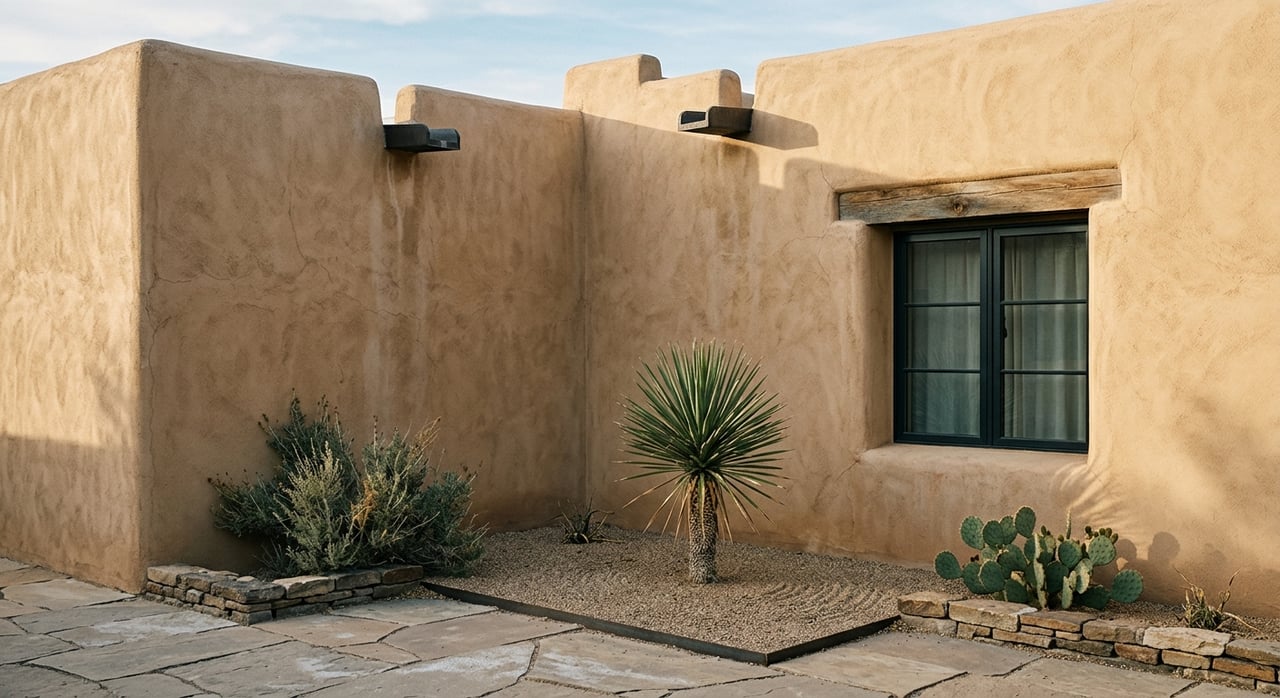
In Taos, adobe is part of the local architectural language. The National Park Service description of Taos Pueblo notes a multi-storied adobe community that has been continuously occupied for more than 1,000 years. Local planning documents also describe how adobe architecture radiates from the plaza and remains part of the town’s protected historic character.
For you as a seller, that means buyers may be looking for authenticity as much as condition. They want to understand how the home fits into Taos, how it has been cared for, and what makes it distinct from a more generic property. A strong sale starts with honoring that story.
Start with preservation-aware preparation
Before you think about paint colors, photos, or showing schedules, focus on the basics that matter most for adobe construction. Adobe is especially sensitive to moisture. The National Park Service preservation brief on adobe explains that adobe bricks shrink and swell as water content changes, and that most deterioration is caused by moisture from rainwater or groundwater.
That is why your pre-listing plan should prioritize water management first. A home that looks beautiful in photos but has unresolved drainage or wall issues may raise concerns during inspections and negotiations. Taking a careful, informed approach upfront can help you avoid surprises later.
Check roof drainage and parapets
A watertight roof is one of the best defenses against rainfall erosion in an adobe home. NPS specifically points to proper drainage as a top priority. If your home has parapets, canales, or other roof drainage features, it is wise to have them evaluated before listing.
Even small drainage problems can lead to larger moisture issues over time. If water is not moving away from the structure correctly, buyers may worry about deferred maintenance. Clear documentation of recent maintenance or repairs can be helpful when those questions come up.
Look closely at grading and standing water
The ground around the home matters just as much as the roof above it. NPS warns that improper drainage and standing water at the foundation can accelerate deterioration. Walk the property after rain if possible, or ask a qualified professional to identify areas where water may be collecting.
If grading adjustments are needed, handling them before you list can improve buyer confidence. It also shows that you have approached the sale with care rather than leaving future work to chance.
Address leaks and visible wall issues
Plumbing leaks, wall cracks, bulging, or coving near grade deserve attention before your home goes live. These are the kinds of details buyers and inspectors notice quickly. NPS recommends professional evaluation by an adobe-knowledgeable soils or structural engineer when visible structural issues appear.
That does not mean every imperfection is a deal-breaker. It means you are better served by understanding the condition of the home and making informed decisions early. In a market where buyers may take time to decide, clarity matters.
Be careful with repairs and finishes
Not every repair helps an adobe home. In fact, some common materials can create bigger problems. The same NPS preservation guidance explains that traditional mud plaster is generally the most compatible coating because it behaves similarly to adobe, while hard cement stucco or cement mortar can trap moisture and make damage harder to detect.
If you are thinking about touch-ups before selling, avoid assuming that newer or harder materials are better. Preservation-aware repair choices can protect the home’s condition and support a smoother conversation with buyers who understand adobe construction. When in doubt, seek advice from professionals familiar with this building type.
Prepare for buyer questions about comfort and efficiency
Many buyers love adobe homes for their look and feel, but they also have practical questions. They may ask whether the home stays cool in summer, how heating costs compare, or what efficiency upgrades have been made. It helps to answer these questions with honesty and context.
The National Park Service guidance on weatherizing historic buildings recommends starting with an energy audit and evaluating the building envelope first. From there, improvements may include addressing air leaks, windows and doors, HVAC, insulation, and shading in ways that minimize impact on historic materials.
NPS also notes that adobe can help keep interiors cool in hot climates, but it does not perform the same way modern insulation does. For sellers, the best approach is to be ready with facts. If you have serviced the HVAC, improved air sealing, or completed thoughtful upgrades, gather that information so buyers can understand how the home lives day to day.
Use staging to highlight character
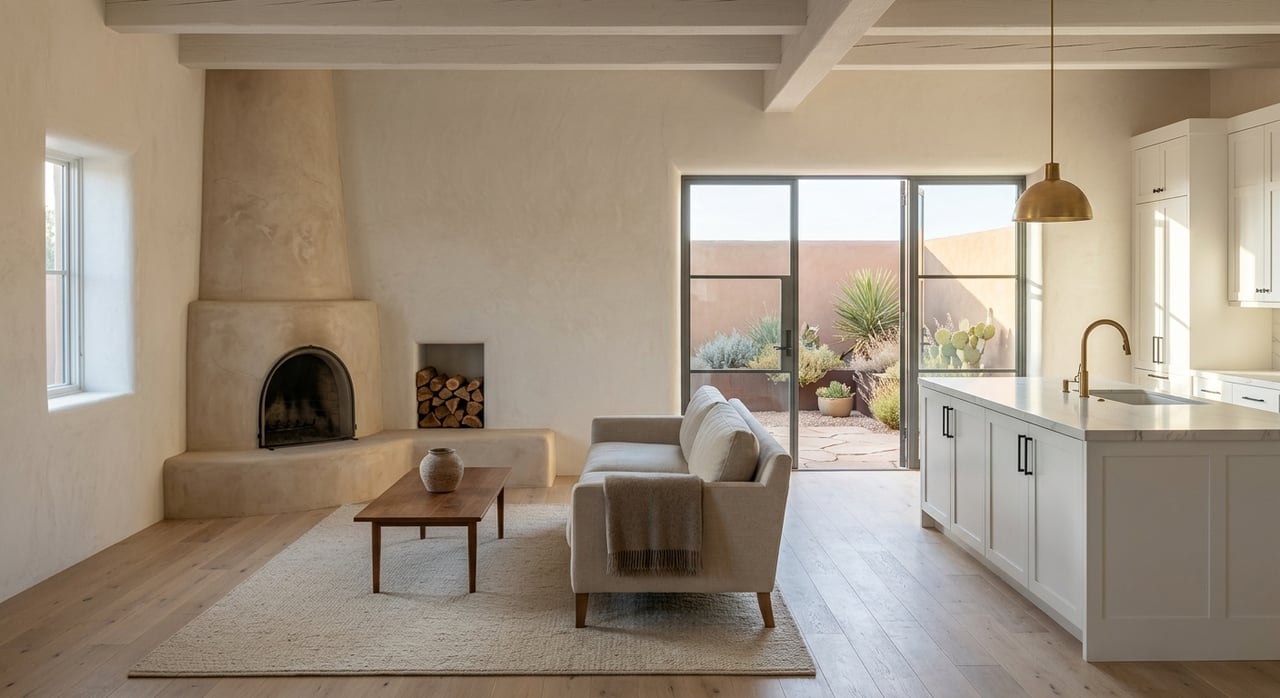
Adobe homes tend to shine when their texture, light, and craftsmanship are allowed to lead. That does not mean over-styling. It means creating a clean, calm setting where buyers can appreciate vigas, plaster walls, natural light, portals, fireplaces, and the home’s connection to the landscape.
Presentation matters in every market, but especially in one where architecture carries so much emotional value. The National Association of Realtors 2025 staging snapshot found that 83% of buyers’ agents said staging made it easier for buyers to envision a future home. The same report found that 81% of buyers rated listing photos as the most useful feature during an online search.
That matters because many Taos buyers begin online, and some are shopping from out of state. Your listing needs to help them feel the home before they ever step inside. Thoughtful staging and strong photography can make that first impression count.
Focus on the rooms buyers notice first
NAR reports that the most commonly staged rooms are the living room, primary bedroom, and dining room. For an adobe home, those spaces often carry the strongest sense of warmth and identity. A well-composed living room can highlight beams, kiva fireplaces, or deep-set windows in a way that feels inviting and grounded.
Simple edits often work best. Remove distractions, reduce visual clutter, and let the materials speak. In a Taos adobe home, authenticity usually lands better than trying to make the property feel overly trendy or generic.
Tell the home’s story clearly
In Taos, place-based storytelling is not fluff. It is part of good marketing. Local planning materials describe the town’s adobe heritage and the role architecture plays in the identity of the community. Buyers are often responding to that connection, whether they are full-time residents, second-home buyers, or people relocating for a different pace of life.
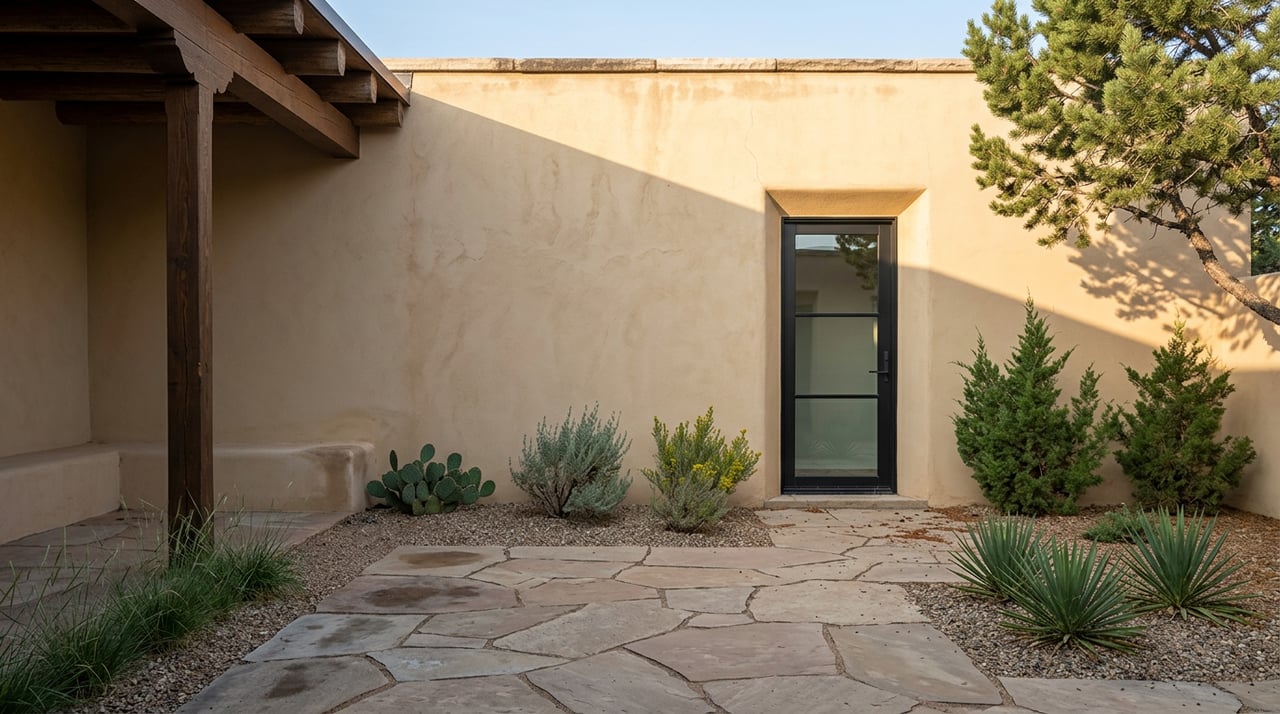
A strong listing should explain what makes your home special in concrete, accurate terms. That may include its adobe construction, original details, thoughtful updates, natural light, mountain views, courtyard flow, or proximity to the cultural heart of Taos. The goal is not to oversell. It is to help buyers understand the home in context.
Know the historic district backdrop
If your property is located within an area subject to local design review, that is important information for buyers. The Town of Taos planning document notes that the downtown and La Loma Plaza historic districts are protected by ordinance and design review. Future exterior changes in those areas may require additional review.
This does not need to be framed as a negative. For many buyers, it is part of what helps preserve Taos’s architectural character. But clear communication matters. If the property falls within one of these protected districts, be prepared to discuss what that could mean for future exterior work.
Mention tax credit context when relevant
Some buyers and sellers may also benefit from understanding available preservation incentives. According to the New Mexico Historic Preservation Division, the state preservation tax credit is 50% of eligible costs, generally capped at $25,000 or $50,000 inside a state-certified Arts & Cultural District. Eligible work may include roofs, parapets, foundation stabilization, windows, trim, and major systems.
That same source notes that the federal historic tax credit is generally 20% for income-producing properties and does not apply to personal residences. If tax credit context is relevant to your property, it can be helpful to share accurate information and encourage buyers to do their own due diligence. In the right situation, it may add useful context to the value of preservation-minded ownership.
Lean on concierge support
Selling an adobe home often involves more moving parts than a typical listing. You may need vendor coordination, repair planning, cleaning, staging support, moving bids, or help getting donation items off your plate. That is where having a hands-on broker can make a real difference.
According to Victoria Gunn’s about page, her concierge approach includes coordinating repairs, staging, maintenance, cleaning, moving bids, and donation drop-offs. For sellers in Taos, that kind of support can reduce stress and keep your preparation on track while protecting the home’s character.
A confident sale starts with the right plan
Selling your Taos adobe home with confidence is really about two things: understanding the construction and presenting the property with care. When you address moisture risks, make compatible repairs, answer buyer questions honestly, and market the home through its architectural story, you give yourself a stronger position in a nuanced market.
If you want a sale process that feels organized, thoughtful, and grounded in Taos expertise, connect with Victoria Gunn Real Estate for a concierge consultation tailored to your home.
FAQs
What should you inspect before selling an adobe home in Taos?
- Focus on roof drainage, parapets, grading, standing water near the foundation, plumbing leaks, and any visible wall or foundation cracks, bulging, or coving near grade.
Why does moisture matter so much for Taos adobe homes?
- According to the National Park Service, moisture is the main cause of adobe deterioration because adobe bricks shrink and swell as water content changes.
How should you handle repairs before listing a Taos adobe house?
- Use preservation-aware repair planning and avoid assuming that hard cement-based coatings are better, since incompatible materials can trap moisture and worsen underlying issues.
What do buyers ask about energy efficiency in adobe homes?
- Buyers often ask about comfort, heating and cooling, insulation, HVAC, and whether any weatherization work has been completed in a way that respects historic materials.
Does staging help when selling a character home in Taos?
- Yes. NAR reports that staging helps buyers envision a future home, and strong listing photos are especially important because many buyers begin their search online.
What should sellers know about historic districts in Taos?
- If a home is in the downtown or La Loma Plaza historic district, future exterior changes may be subject to local design review, so it is helpful to be ready to discuss that context with buyers.
Are there historic tax credits related to Taos adobe properties?
- In some cases, yes. New Mexico offers a state preservation tax credit for eligible work, while the federal historic tax credit generally applies to income-producing properties rather than personal residences.